
Introduction
If you’ve been searching for insulin resistance symptoms or wondering how to improve insulin resistance, you’re not alone. Many people with insulin resistance, prediabetes, PCOS, type 2 diabetes, or fatty liver (NAFLD/MASLD) feel stuck with cravings, energy crashes, belly weight gain, or “borderline” blood results, even when they’re eating what seems like a healthy diet.
The good news is that insulin resistance can often improve with the right nutrition and lifestyle strategy. Not extreme dieting. Not punishing workouts. Just a clear, structured plan that helps your body respond to insulin more effectively, so your energy, appetite, and blood sugar become steadier.
I’m a London-based naturopathic nutritionist and my approach is root-cause and gut-friendly. That means we focus on blood sugar balance while also supporting digestion, sleep, stress, and routines you can actually keep. These are often the missing pieces when people struggle to stay consistent.
By the end of this guide, you’ll have a practical roadmap to start improving insulin sensitivity today.
Quick note: This article is for general education and doesn’t replace medical advice. If you have diabetes or use glucose-lowering medication, changes should be personalised and aligned with your GP/diabetes team.
Who this guide is for
This is for you if you:
- feel tired after meals, crave sugar in the afternoon, or snack at night
- have been told you have insulin resistance or prediabetes (or your HbA1c is creeping up)
- have PCOS and insulin resistance is part of the problem
- want a plan that supports blood sugar without triggering bloating, reflux, or IBS-type symptoms
What is insulin resistance?
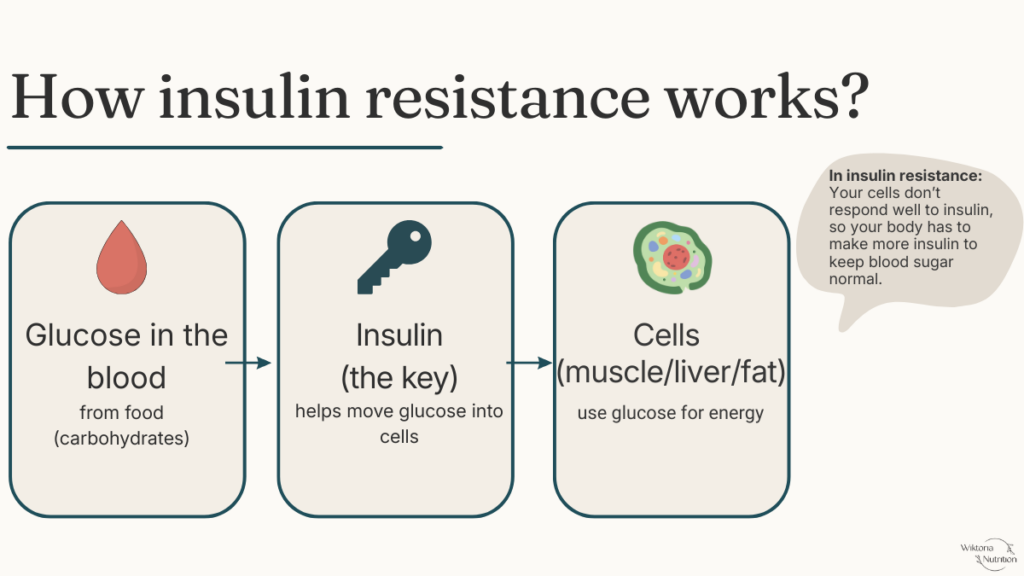
Insulin is a hormone made by your pancreas. It helps move glucose (sugar) from your bloodstream into your cells, where it can be used for energy.
Insulin resistance means your cells don’t respond as well to insulin, so your body often produces more insulin to compensate. Over time, this can contribute to higher blood sugar levels and increase risk of prediabetes and type 2 diabetes, and it’s commonly associated with PCOS and fatty liver disease (NAFLD/MASLD).
The goal is not “zero carbs” or perfection. The goal is improving insulin sensitivity so your body can handle carbohydrates more effectively and your blood sugar becomes steadier.
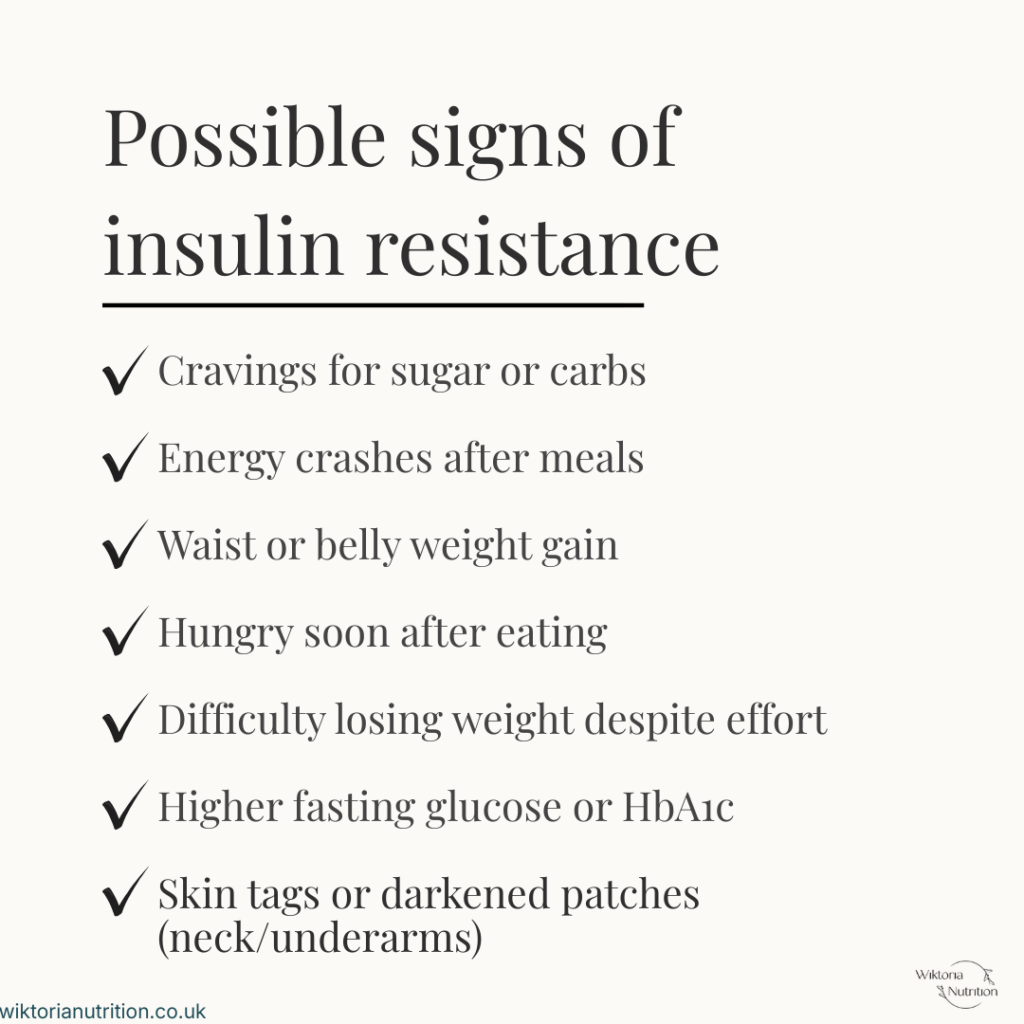
Possible signs of insulin resistance
Insulin resistance can be silent, so there isn’t one “perfect” symptom list. The points below are common clues people notice, but blood tests and medical context matter (especially if you have PCOS, prediabetes, type 2 diabetes, or fatty liver).
Possible signs people may notice include:
- Cravings for sugar or carbs, especially mid-afternoon or after dinner
- Energy crashes after meals (sleepy, foggy, or needing snacks to keep going)
- Feeling hungry soon after eating, even after a “normal” meal
- More weight around the waist (or “stubborn” belly weight)
- Difficulty losing weight despite effort (often alongside strong hunger/cravings)
Blood results can also give clues, such as:
- Higher fasting glucose or HbA1c (and sometimes raised triglycerides)
In some people, skin changes may occur, such as:
- Skin tags or darkened patches in skin folds (often around the neck or underarms)
If you recognise yourself here, it doesn’t mean you’re “failing”. It means your body is giving you useful feedback — and there are clear, practical steps that can help.
The UK blood markers people often ask about (simple explanation)
In the UK, your GP may use HbA1c and/or fasting glucose to assess blood sugar trends. Many people also see clues in triglycerides and liver enzymes (especially if NAFLD/MASLD is present).
Diabetes UK describes HbA1c 42–47 mmol/mol as being in the prediabetes range.
If you’re not sure what your results mean, this is exactly the kind of thing I interpret with clients and turn into a practical plan.
Why most diets fail for insulin resistance
A lot of popular diets don’t work long-term for insulin resistance because they miss the real drivers:
- Extreme restriction → rebound cravings and “all-or-nothing” cycles
- Not enough protein → hunger, snacking, and unstable blood sugar
- Carbs without structure → big spikes and crashes (even with “healthy” foods)
- No strength training → muscle is one of your best tools for insulin sensitivity
- Ignoring gut symptoms → if food choices upset digestion, consistency collapses
A root-cause approach asks: what’s making this hard in your real life (sleep, stress, digestion, schedule, appetite, comfort eating, meals on the go) and builds a strategy around that.
Want a plan tailored to your blood results and gut symptoms?
If you’re doing your best but still feeling stuck, you may not need “more willpower”. You may need a plan that’s personalised to your labs, lifestyle, appetite and digestion.
In my Initial Consultation, we’ll review your symptoms and routine, interpret your blood results (if available), and create a gut-friendly plan you can follow consistently.
Book an Initial Consultation
Or if you’re unsure where to start: Book a free 15-minute discovery call
Step-by-step plan to improve insulin sensitivity naturally (gut-friendly and realistic)
Step 1: Prioritise protein at every meal
Protein helps stabilise blood sugar, reduces cravings, and supports muscle maintenance (which matters for insulin sensitivity).
Gut-friendly protein ideas (choose what suits you):
- Eggs
- Greek yoghurt or skyr (or lactose-free if needed)
- Fish or chicken
- Tofu/tempeh
- Cottage cheese (or lactose-free)
- Lean mince, turkey, or slow-cooked options if your digestion is sensitive
Simple rule: build your plate around protein first, then add vegetables/fibre, then carbohydrates.
Step 2: Structure your carbohydrates (don’t eliminate them)
Carbohydrates aren’t automatically the problem. The most common issue is portion + timing + what you pair them with.
Choose carbs that come with fibre:
- Oats, quinoa, brown rice (portion matters)
- Beans, lentils, chickpeas
- Potatoes cooled and reheated (often better tolerated and more filling for some people)
- Fruit (whole fruit over juice)
Three rules that work for most people:
- Pair carbs with protein + fat (reduces spikes and keeps you full)
- Keep carbs evenly distributed through the day (instead of one huge hit)
- Start meals with veg/protein first, then carbs
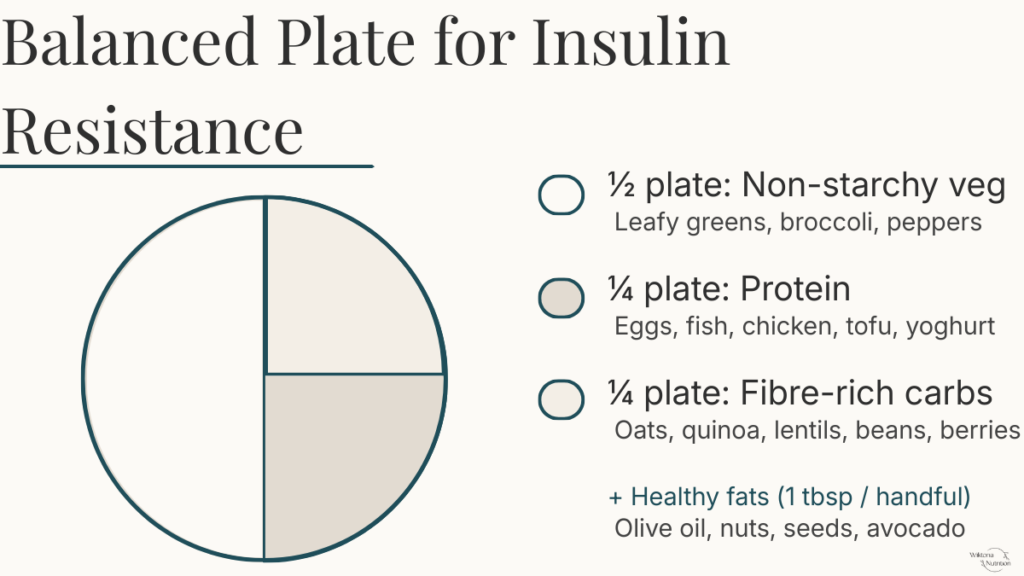
Use this template as a guide for most lunches and dinners (and adjust portions to your needs):
Gut-friendly note: If beans/lentils bloat you, start with smaller portions, rinse well, choose lentils (often easier), or use alternatives temporarily. We can increase fibre gradually without misery.
Step 3: Move in a way that improves insulin sensitivity (especially strength training)
Muscle is metabolically active tissue and helps your body handle glucose more efficiently.
The NHS recommends adults aim for 150 minutes of moderate activity per week, plus strength activities on 2+ days/week.
If you want the simplest blood-sugar-friendly routine:
- 10–20 minute walk after one meal daily (start with dinner)
- 2 strength sessions per week (home workouts absolutely count)
If you have medical conditions or injuries, choose movement that’s safe for you.
Consistency beats intensity.
Step 4: Improve sleep (because blood sugar isn’t just food)
Poor sleep can worsen cravings, appetite regulation, and glucose control.
Aim for:
- A consistent bedtime/wake time most days
- A wind-down routine that actually feels doable (even 10 minutes)
- Less screen time right before bed if possible
If sleep is a struggle, we build a plan around your real life instead of unrealistic “perfect sleep hygiene”.
Step 5: Reduce liquid sugar and ultra-processed snacks (big impact, fast win)
Common culprits that drive spikes:
- Sugary drinks, fruit juice, sweetened coffees
- “Grab and go” pastries/snack bars
- Large portions of refined carbs without protein
This doesn’t need to be a ban. Most clients do best with a “swap strategy” that still feels satisfying and fits their routines.
Step 6: Manage stress (a root-cause piece people underestimate)
Chronic stress can drive appetite changes, cravings, and sleep disruption. You don’t need to live stress-free (nobody does). You do need a plan that prevents stress from constantly knocking you off track.
Simple options:
- A short walk outside daily
- 5 minutes of slow breathing before meals
- Strength training (surprisingly good for stress)
- Boundaries with work and meal timing
How long does it take to improve insulin resistance?
You can often feel better before lab markers change.
Many people notice:
- steadier energy and fewer crashes within 1–2 weeks
- reduced cravings within 2–4 weeks
- measurable changes in markers (like HbA1c) over 8–12+ weeks, depending on your starting point, consistency, and medical context
If you’re tracking results, it becomes much easier to stay motivated because you can see what’s working.
FAQ
Can insulin resistance be reversed?
Insulin sensitivity can improve significantly for many people, especially when caught early and addressed consistently. What “reversed” means depends on your labs and medical context, so I usually focus on measurable improvements and sustainable routines.
Does intermittent fasting help?
It can help some people, but it’s not ideal for everyone, especially if it increases stress, worsens sleep, triggers overeating later, or doesn’t suit PCOS/hormonal symptoms. Personalisation matters.
Are supplements necessary?
Sometimes helpful, never the foundation. Food structure, movement, sleep, stress, and gut tolerance come first.
Do I need to follow a keto diet?
Not necessarily. Some people benefit from a lower-carb approach, but extreme restriction isn’t required for everyone. The best approach depends on your blood results, lifestyle, preferences and gut tolerance.
Next step: get clear on what will move your numbers
If you’ve recognised yourself in these insulin resistance symptoms, the most important thing is to take action early. Small changes done consistently can make a measurable difference.
Work with me 1:1 (root-cause, gut-friendly)
Initial Consultation (£150): We’ll build a personalised plan based on your symptoms, blood results (if available), digestion, schedule and goals. You’ll leave with clear next steps and a plan you can actually follow.
Follow-ups (£75): Ongoing support, adjustments, accountability, and progress tracking so you keep momentum and see measurable change.
3 or 6-month plans: Best if you want structure and support over time, with regular check-ins, troubleshooting (cravings, energy, gut symptoms), and a plan that evolves as your markers improve.
Book your appointment here: Booking
Not sure which option is right? Book a free 15-minute discovery call and I’ll point you in the best direction.
Online appointments available.